

The People of Minneapolis vs. ICE’: A Street-Level View
📅 January 18, 2026
✍️ Editor: Sudhir Choudhary, The Vagabond News


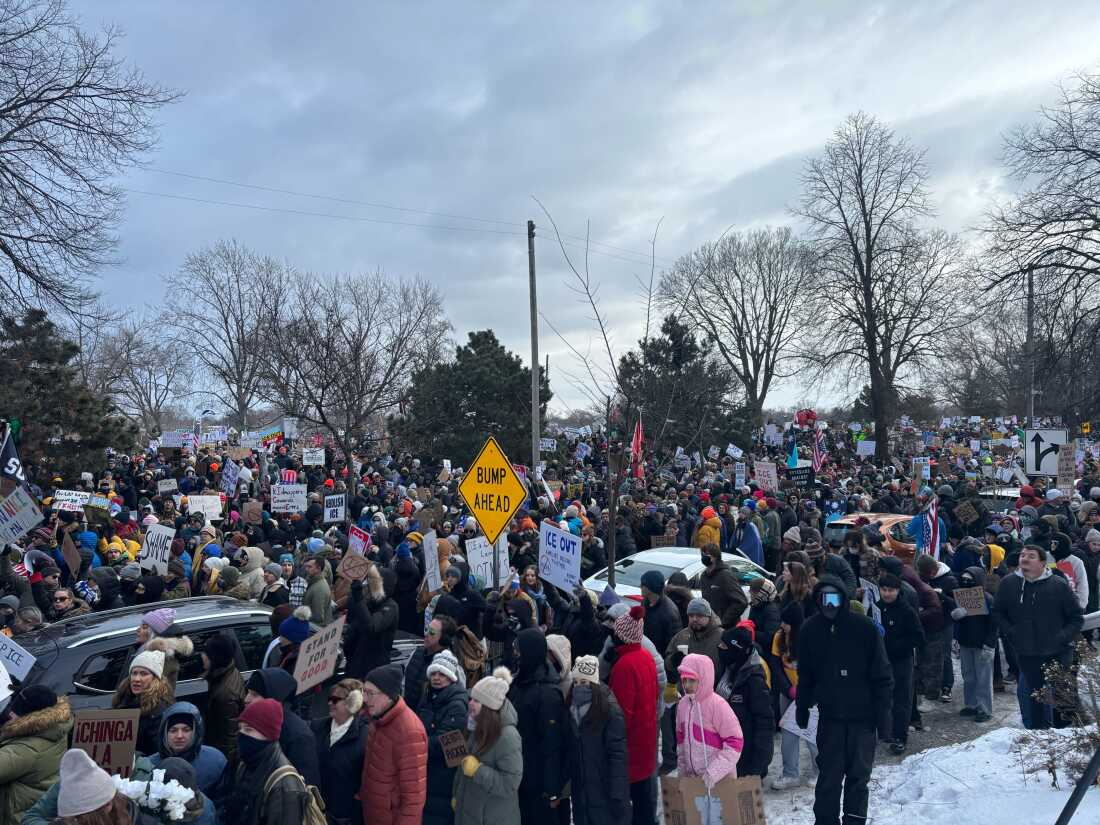
On the streets of Minneapolis, what began as localized demonstrations against federal immigration enforcement has hardened into a deeply polarized clash between community members and U.S. Immigration and Customs Enforcement agents deployed under “Operation Metro Surge.” From sidewalks and street corners to makeshift vigils and marches, residents and protestors describe a vivid and often chaotic picture of life at ground level amid heavy federal presence and intense public scrutiny.
A Community in Conflict
For many people on the ground, daily life now intertwines with large crowds, police vehicles, and what some describe as an intrusive enforcement posture by federal agents. Thousands of anti-ICE demonstrators have taken to the city’s avenues in the weeks following the January 7 killing of Renee Nicole Good, a 37-year-old Minneapolis resident shot and killed by an ICE agent during an enforcement operation. The incident sparked national uproar and has become a rallying point for protest movements locally and across the United States.
At makeshift encampments and along major thoroughfares, chants against federal immigration policy mix with calls for accountability for Good’s death. Pouring out from local cafes, parks and street corners, demonstrators describe a sense of frustration that transcends standard protest narratives: the conflict, they say, is about dignity, community safety, and federal overreach.
“It’s not just about one incident anymore,” said a local organizer who has helped coordinate rallies. “People feel like their city has been militarized, and it’s up to us to push back.”
Stories from the Streets: Fear, Anger, and Defiance
Across neighborhoods, residents recount confrontations with ICE agents, armored vehicles, and law enforcement. Videos circulating online show tense moments in which federal agents advance on crowds, deploy crowd-control tactics, or make arrests during demonstrations. Others capture small confrontations—shouting matches between opposing groups—that reflect broader national divides over immigration policy.
In one account shared with local news outlets, demonstrators described being sprayed with chemical agents during a midday rally, leaving some with burning eyes and difficulty breathing. Another account focused on personal stories of families avoiding stores or schools, fearful that routine activities could intersect with aggressive enforcement actions.
Nearby businesses report an atmosphere of uncertainty. Some owners say foot traffic has dwindled since the federal deployment began, while others express concern over property damage and disruptions linked to sustained demonstrations.
A City Transformed by Enforcement
Federal immigration officers deployed to Minneapolis as part of Operation Metro Surge now significantly outnumber local law enforcement in many districts, observers note. What originally were targeted actions aimed at individuals suspected of violating immigration statutes have, according to critics, expanded into broader public engagement that has drawn protesters and bystanders alike.
Minnesota civil liberties attorneys have described instances in which people have been stopped without clear grounds, questioned about their legal status, or detained during seemingly peaceful activities, contributing to a pervasive sense of unease. The American Civil Liberties Union (ACLU) of Minnesota is litigating against what it terms “warrantless arrests, racial profiling, and unlawful conduct” by ICE and allied federal agents.
Escalations and Legal Checkpoints
Tensions peaked after a second shooting linked to federal agents and multiple confrontations during street protests. In response to mounting legal challenges and public concern, a federal judge in Minnesota issued an injunction restricting how federal officers can engage with peaceful protestors, including limitations on detentions and use of force unless clear criminal conduct is evident.
Nevertheless, not all voices on the street reflect uniform opposition to federal action. Smaller counter-demonstrations in support of immigration enforcement have also emerged, underscoring deep ideological divisions within the community.
Safety, Solidarity, and Daily Life
Alongside the demonstrations, neighborhood groups and community leaders are organizing peace-building walks, legal observer programs, and support networks for those affected by enforcement actions. Volunteers offering water and warm food to protesters have become common scenes outside protest perimeters.
Yet amid solidarity efforts, ordinary residents speak of a toll on daily rhythms. School schedules have shifted in some areas, with parents keeping children home when protests approach, while others describe silent mornings and quieter streets as residents adjust routines to avoid conflict zones.
Broader Implications for Minneapolis
The street-level view in Minneapolis is more than a series of protest snapshots; it is a reflection of how national immigration policies can shape city landscapes, local governance, and community relations. On one hand, residents express a yearning for clarity, justice and civic respect; on the other, they confront the reality of overwhelming federal enforcement tactics that many feel erode trust.
As legal battles unfold and federal public safety orders evolve, the perspectives captured at ground level paint a portrait of a community grappling with profound questions about rights, enforcement, and the role of federal authority in city life.
Sources: Reuters, MPR News, CBS News, ACLU press releases
Tags: Minneapolis, ICE protests, Renee Good, Operation Metro Surge, civil liberties, immigration enforcement
News by The Vagabond News


