


Editor: Sudhir Choudhary
Date: February 10, 2026
President Donald Trump is weighing a significant expansion of the United States’ nuclear arsenal and the possible resumption of underground nuclear weapons testing, moves that would mark a sharp departure from decades of U.S. policy restraint and arms control commitments, according to administration statements and defense officials.
The discussion comes as President Donald Trump’s administration signals it is no longer constrained by several Cold War–era and post–Cold War arms control frameworks, arguing that strategic rivals have expanded or modernized their nuclear forces without comparable limitations.
Shift in Nuclear Posture
In recent remarks, President Donald Trump said the United States must ensure “overwhelming strength” in its nuclear deterrent, citing developments in Russia, China, and North Korea. Senior administration officials have indicated that options under review include increasing the number of deployed warheads, accelerating modernization programs, and reassessing the country’s long-standing moratorium on nuclear explosive testing.
The United States last conducted an underground nuclear test in 1992 and has since observed a voluntary testing halt, despite never ratifying the Comprehensive Nuclear-Test-Ban Treaty. Previous administrations from both parties argued that advanced simulations and subcritical experiments were sufficient to maintain the reliability of the arsenal without full-scale detonations.
Underground Testing Debate

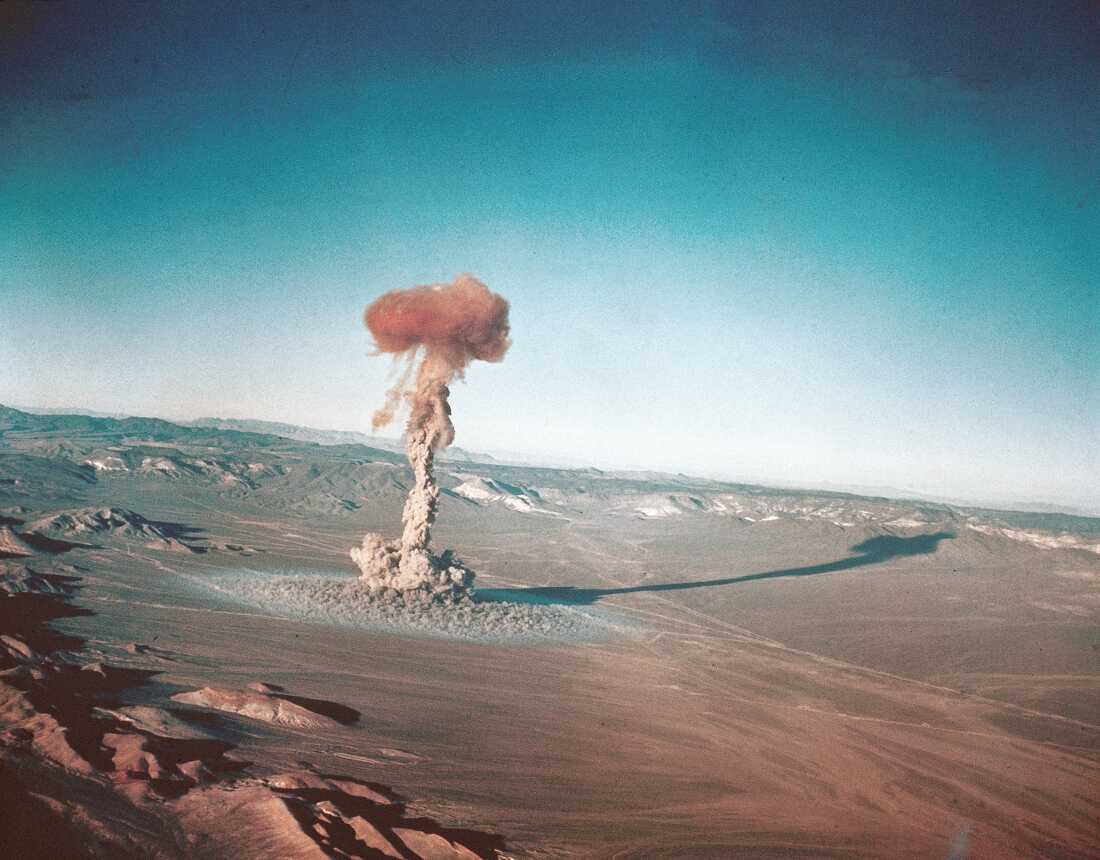
Defense officials said renewed testing is being discussed internally as a contingency option, not as a finalized policy decision. Supporters within the administration argue that underground tests could provide assurance about aging warheads and signal resolve to adversaries. Critics counter that such tests could trigger a global cascade of renewed nuclear testing by other powers and undermine nonproliferation efforts.
Arms control experts warn that resuming nuclear tests would likely draw international condemnation and could weaken global norms that have limited nuclear detonations for more than three decades. Several U.S. allies have also expressed concern privately, according to diplomats familiar with the discussions.
Strategic and Political Implications

The administration’s approach reflects President Donald Trump’s broader skepticism toward multilateral arms agreements, which he has repeatedly criticized as constraining the United States while allowing competitors to gain advantages. The White House has emphasized that any decisions will be framed as necessary responses to evolving security threats.
Congressional reaction has been divided. Some Republican lawmakers support expanding nuclear capabilities as a deterrent measure, while Democrats and some nonproliferation advocates argue that such steps increase the risk of escalation and divert resources from conventional defense priorities.
No formal order authorizing new nuclear tests or a large-scale arsenal expansion has been issued. Administration officials said reviews are ongoing, and any major policy shift would involve coordination with the Department of Defense, national laboratories, and Congress.
For now, President Donald Trump’s comments have reopened a debate long considered settled in Washington, raising questions about the future of U.S. nuclear strategy and the global arms control system built in the aftermath of the Cold War.
Sources: Associated Press; U.S. Department of Defense statements; White House remarks; arms control policy analyses
U.S. Nuclear Policy, President Donald Trump, Nuclear Weapons, Arms Control, National Security
News by The Vagabond News


