

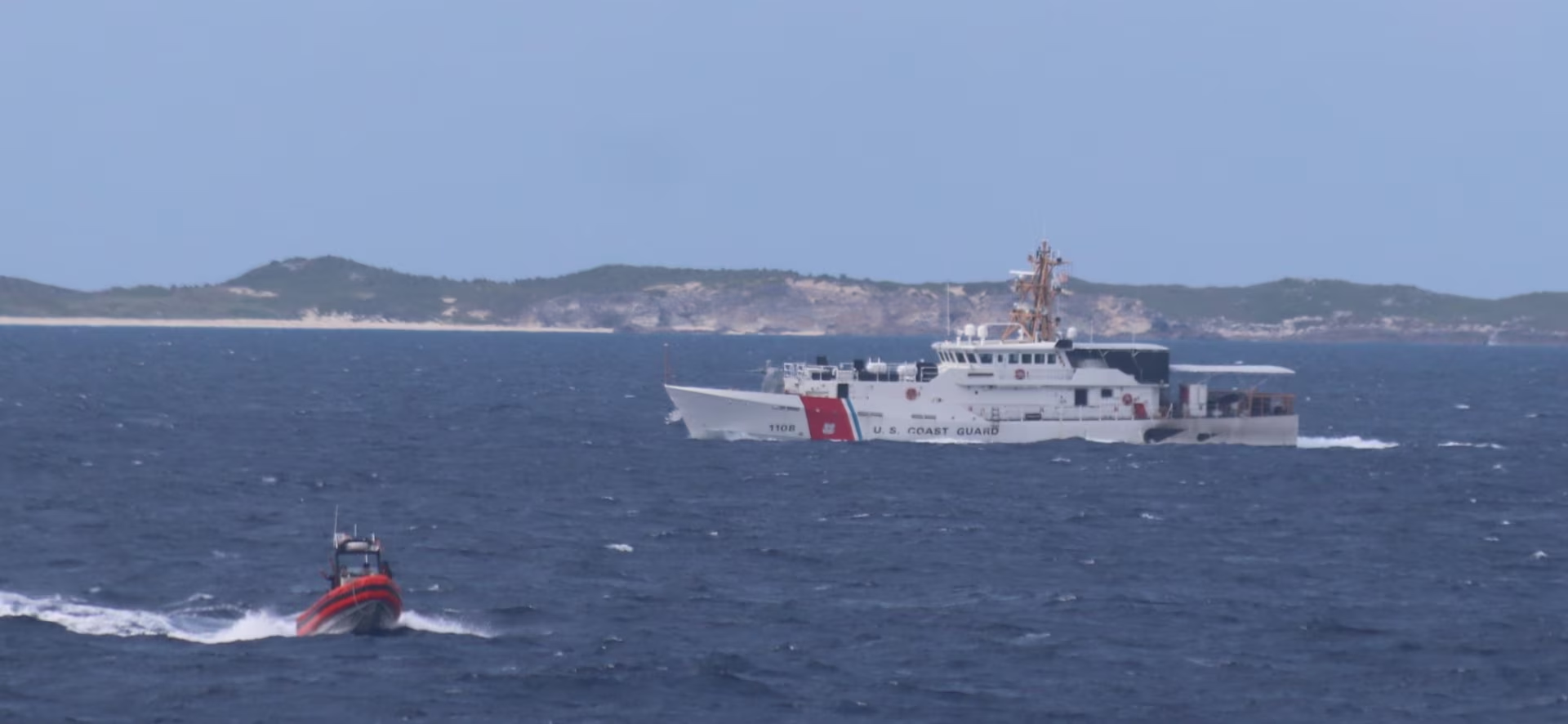
Coast Guard Shocking Rollback on Hate Protections
A sweeping policy update inside the U.S. Coast Guard is sparking alarm across the ranks and among civil-rights observers. The new guidance, described in an internal servicewide update reviewed by multiple outlets and reported by personnel familiar with the change, reframes symbols such as swastikas and nooses as merely “politically divisive” rather than categorically hateful. Even more consequential, the policy appears to remove explicit protections for transgender service members. If confirmed and implemented, the Coast Guard hate protections rollback would mark a dramatic departure from recent federal efforts to curb extremist and discriminatory behavior in uniform.

What changed—and why it matters
According to personnel who have seen the policy, the most striking shift is definitional. Historically, symbols like the swastika and noose have been recognized across federal agencies as unambiguous emblems of hate, intimidation, or white supremacist ideology. Reclassifying these as merely “politically divisive” moves them out of a bright-line category that typically triggers disciplinary action and into a murkier zone where context disputes and subjective judgments can blunt accountability. For targeted troops—particularly those who are Jewish, Black, or members of other historically marginalized communities—that change carries practical consequences in barracks, aboard cutters, and at training centers.
Equally unsettling to many service members is the apparent deletion of language that explicitly protects transgender personnel from discrimination and harassment. The Coast Guard, as a military service that sits within the Department of Homeland Security but frequently aligns its personnel standards with the Department of Defense, had moved in recent years to harmonize with broader federal protections reinstated in 2021. Eliminating those explicit safeguards risks creating inconsistencies across commands and inviting a chilling effect on service members who already navigate significant stigma.
A break from recent federal direction
The broader federal landscape makes the Coast Guard’s policy shift especially notable. After the January 6 attack, the Department of Defense issued stronger guidance to counter extremist activity and symbols within the ranks, acknowledging how hate-driven ideologies threaten unit cohesion and mission readiness. Beyond DoD, multiple federal agencies have sharpened their civil-rights enforcement. Against that backdrop, the Coast Guard hate protections rollback runs counter to the spirit—if not the letter—of recent reforms aimed at deterring harassment and rooting out extremist sympathies.
It is also out of step with established understandings of certain symbols. A noose is not simply a political statement; it is a tool of terror historically deployed to intimidate Black Americans. The swastika, reclaimed by neo-Nazi movements, remains a global emblem of anti-Jewish hatred and genocide. Downgrading these symbols to “politically divisive” risks normalizing their presence in workplaces and living spaces, eroding trust among shipmates, and undermining commanders who must enforce good order and discipline.
Operational and legal implications
Practically speaking, the policy will force commanders and equal opportunity officers into more burdensome case-by-case determinations. Instead of relying on clear policy that treats certain symbols as per se violations, they may now have to assess “context,” intent, and impact—criteria that are easily gamed and often retraumatizing for those targeted. That can slow investigations, complicate discipline, and foster cynicism among victims who see their concerns rebranded as political disagreements.
Legally, the Coast Guard must navigate the overlapping obligations of military necessity, service-specific policy, and federal civil-rights law. The military context affords latitude to restrict speech and symbols that harm cohesion or readiness. A policy that soft-pedals historically violent symbols could invite scrutiny in equal employment and harassment complaints, especially when the Coast Guard recruits, trains, and deploys a diverse force in close quarters where mutual trust is non-negotiable.
Transgender protections in the crosshairs
The reported removal of explicit protections for transgender service members raises additional red flags. In recent years, the federal government restored the ability of qualified transgender individuals to serve openly. Many commands across services have implemented training, medical guidance, and administrative processes to ensure fair treatment. Stripping explicit language from Coast Guard policy risks signaling a permissive environment for harassment or denial of care—even if other federal standards technically still apply. The ambiguity alone can deter reporting and erode retention among highly trained, scarce specialties the Coast Guard depends on, from cyber to aviation to rescue swimmers.
!Coast Guard recruit training formation, Cape May. Credit: U.S. Coast Guard/Public Domain
What leaders, advocates, and rank-and-file are watching
– Clarity: Commands need immediate clarification. Are swastikas and nooses now “contextual,” and if so, what context could possibly justify their presence in shared workspaces?
– Enforcement: Without bright-line rules, how will equal opportunity offices track and resolve incidents? What metrics will ensure consistent enforcement across sectors and districts?
– Retention: Signals matter. If vulnerable service members sense backsliding on dignity and respect, expect increased attrition—and recruitment headwinds—in an already tight labor market.
– Alignment: Will DHS or the White House intervene to reconcile the Coast Guard’s policy with broader federal anti-extremism and anti-discrimination frameworks?
A better path forward
Leaders have tools to protect both discipline and rights. The Coast Guard can:
– Reinstate explicit bans on universally recognized hate symbols, with narrow, mission-bound exceptions (e.g., historical education in approved training contexts).
– Restore clear, unequivocal protections for transgender personnel, aligning with federal guidance and medical standards of care.
– Strengthen reporting pathways, ensuring targeted members can safely raise concerns without fear of reprisal.
– Publish anonymized data on incidents and outcomes to build trust in the system’s fairness and transparency.
The stakes extend beyond headlines. The Coast Guard’s missions—search and rescue, maritime safety, drug interdiction, and environmental protection—demand tight-knit crews that rely on each other in extreme conditions. Anything that licenses intimidation or ambiguity corrodes that trust.
The bottom line on the Coast Guard hate protections rollback
Words on paper shape conduct at sea and on shore. Recasting swastikas and nooses as “politically divisive” rather than hateful, while deleting explicit transgender protections, sends a message that many in uniform will read as permissive. The Coast Guard can and should course-correct—fast. Clear standards against hate, paired with unambiguous protections for every Coast Guardsman and woman, safeguard cohesion, readiness, and the basic dignity that every member of the service deserves.
News by The Vagabond News


